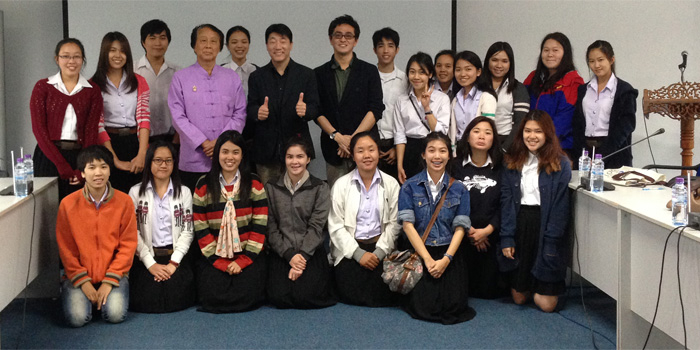
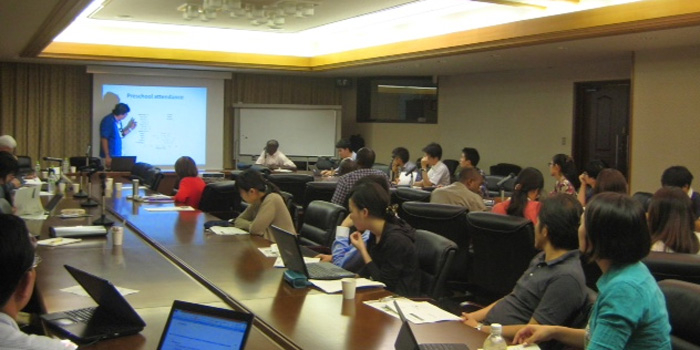
Advanced Overseas Research in Chiang Mai (Kentaro SHIMADA)
Purpose of my advanced overseas research is to develop my dissertation proposal, to visit schools and boards of education in Chiang Mai, Thailand and to participate in the workshop, held...
Graduate School of International Cooperation Studies (GSICS), Kobe University
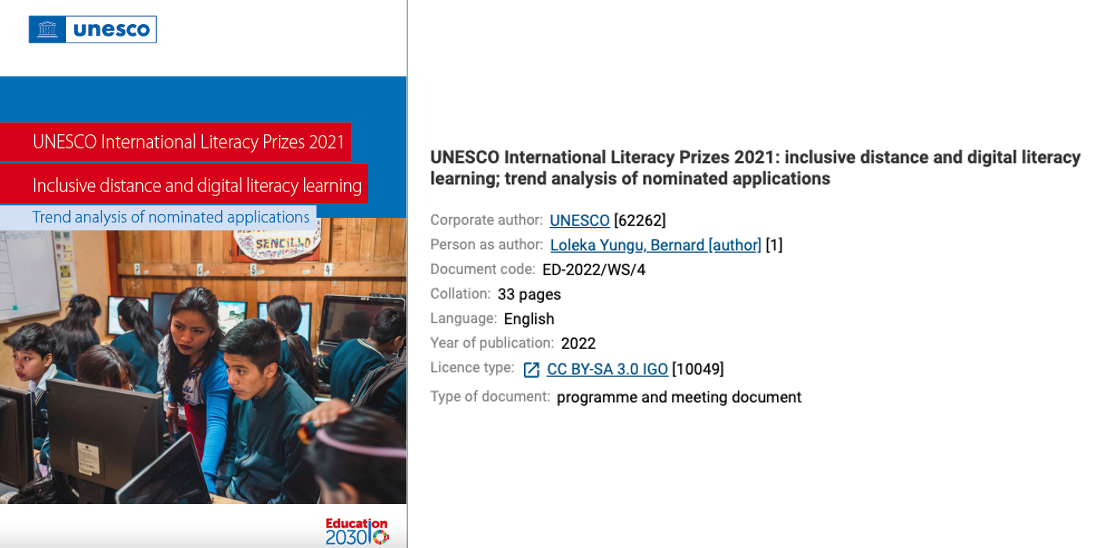
Recently, UNESCO published the paper by Bernard Loleka Yungu, currently a doctoral student, titled “UNESCO International Literacy Prizes 2021 Inclusive distance and digital literacy learning Trend Analysis of Nominated Applications”. The paper is available on a UNESCO website in this link.
This paper describes characteristics and promising practices of literacy programmes with focus on inclusive distance and digital literacy learning. It examined the innovative aspects of distance and digital learning, and associated challenges and solutions, based on 50 programmes nominated for the UNESCO ILP (International Literacy Prize) of 2021. According to this analysis, the programs of distance learning are paid attention to high, low and no technology, languages of instruction, target population and impact to improve policies, governance and partnerships, pedagogies and learning modalities, quality and relevance, equity, incentives, and monitoring and evaluation, identifying promising practices and major challenges. However, there are still challenges left regarding digital methods, digital safety, data protection and personal data privacy under COVID-19 criss.
Bernard Loleka Yungu is pursuing his doctoral studies at Kobe University under the supervision of Professor Ogawa and in the meantime works as an education economist at the World Bank, based in Gabon.
Authored by Mami Fujiwara (Doctoral Student)