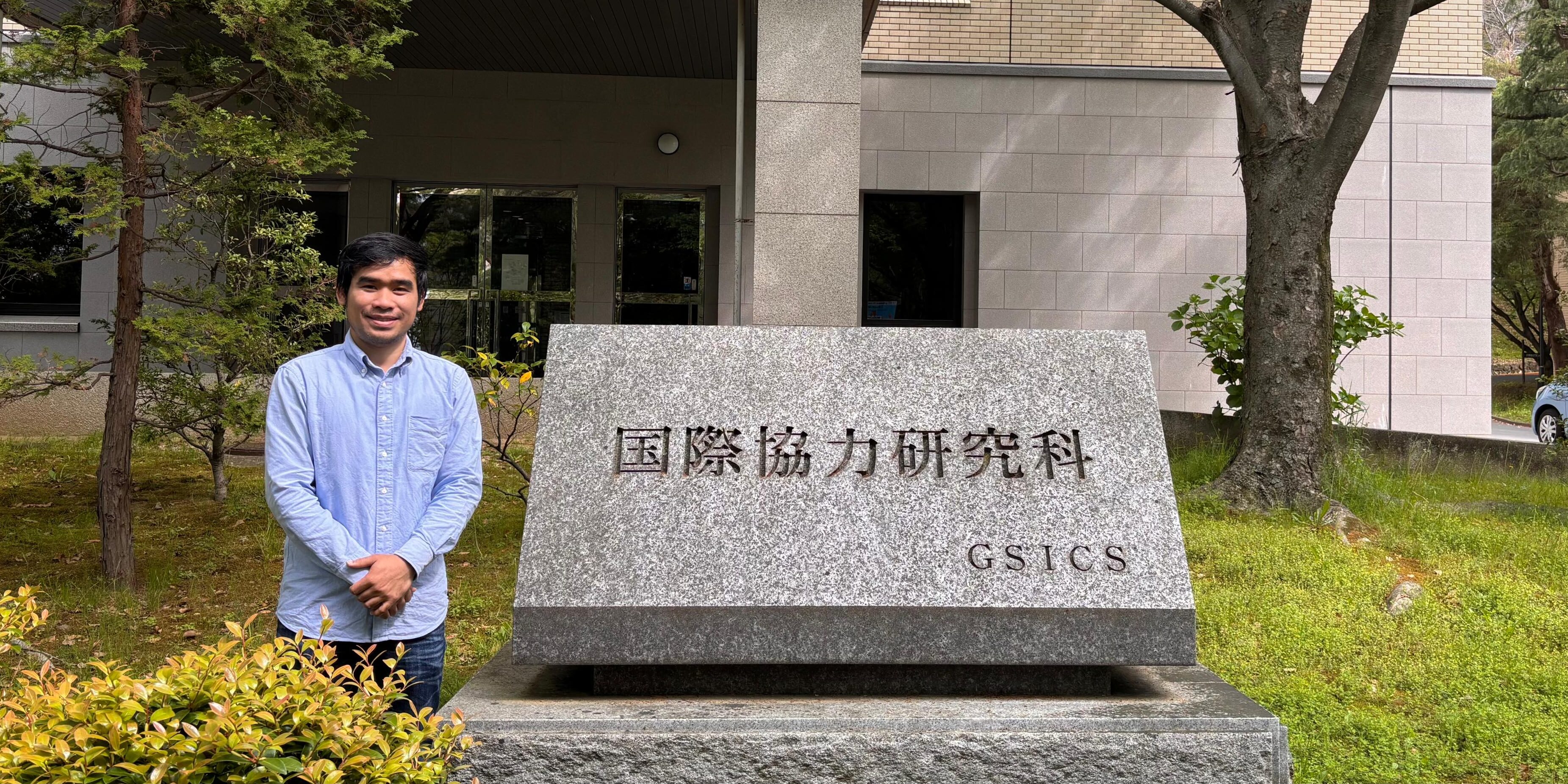
Research Interests:
- Economics of Education, Early Childhood Education, Basic Education/General Education, Teacher Education, TVET, Tertiary Education, Human Resource Development, and Project Management
Education:
- Master of International Studies, Graduate School of International Cooperation Studies, Kobe University (September 2026)
- Bachelor of Business Management, Thipvaly College (May 2013)
- Higher Diploma in Pedagogy of Mathematics, Ongtue Sangha Teacher Training College (May 2010)
Experiences:
Long-term Experiences
- Officer at the Ministry of Education and Sports, Lao PDR (2014 – present)
– Implementation of the Global Partnership for Education III: Learning and Equity Acceleration Project (GPE III-LEAP) Funding by GPE under the World Bank Group (2021–2024)
– Second Global Partnership for Education Project (GPE II) Funding by GPE under the World Bank Group (2015–2021)
– Responsible for the implementation of the Early Childhood Education (ECE) Project Funding by the World Bank Group (2014–2020) - Officer at the Lao Red Cross, Vientiane Capital Branch (2013 – 2014)
- Volunteer Teacher at Sangha Lower Secondary School, Beng District, Oudomxay Province (in academic years 2006 – 2008)
Short-term Experiences
- Environmental and Social Safeguards: At the World Bank Group (WB) in Laos, 2020 (GPE II project)
- Procurement, project assets administration and management: At the World Bank Group (WB) in Laos, 2020 (GPE II project)
- Project Management, Monitoring and Evaluation: At the Asian Institute of Technology (AIT), Bangkok, Thailand, 2019
- Budget Control: At the World Health Organization (WHO) in Laos (School Health Deworming programme), 2014
Publications:
- N/A
Academic Associations:
- Japan Comparative Education Society (JCES)
Academic Conference Presentation:
- Xaysakhone, K. “Analysis of Determinant Factors Affecting Equitable Access to Early Childhood Education in Lao PDR.” Proceedings of the 62nd Japan Comparative Education Society Annual Conference, p39, 2026. (E)
Dear Potential Candidates for the Ogawa Seminar;
First of all, I would like to express my sincere gratitude to Professor Keichii Ogawa for accepting me as one of his seminar students. Being part of the Ogawa Seminar has been a valuable and memorable experience throughout my master’s journey. The seminar challenged me to go beyond what I thought I was capable of, especially in research and analytical thinking. Through the seminar, I have had the valuable opportunity to learn from distinguished professors and policymakers from around the world, particularly experts from international organizations, as well as from my senpai and colleagues. I gained new perspectives and skills that I believe will continue to guide me throughout my academic and professional career at MOES, Lao PDR. Professor Ogawa can sometimes be strict and demanding, but I have come to understand that his guidance and high expectations are intended to help us grow and achieve our potential. I am truly grateful for everything I have learned and experienced through the seminar. I am also deeply honoured and proud to have been a student of Professor Ogawa. Finally, I sincerely hope that many more students will have the opportunity to join the Ogawa Seminar, learn from one another, and become part of this wonderful academic community. I look forward to welcoming you to the Ogawa Seminar.