Undertaking an internship at UNESCO Jakarta from 1 July to 31 December 2025 was an opportunity that Yuniasih Purwanti considers a significant milestone in her academic and professional journey. It was an experience she had never imagined before—being able to step into the world of UN agencies and participate in strategic discussions with high-level representatives from government ministries, bilateral agencies, and various UN organisations. This exposure offered her a new perspective on how education and skills policies are shaped and implemented at regional and international levels.
During her internship, Yuni supported the preparation of a range of project proposals related to education, skills development, and the application of digital technologies—particularly artificial intelligence (AI)—in technical and vocational education and training (TVET). Her work focused on translating policy ideas and analytical insights into practical initiatives, while collaborating closely with regional and international stakeholders.
One of her main responsibilities was contributing to the preparation and implementation of a regional AI-focused webinar series for TVET practitioners. This included supporting concept development, coordinating with partner institutions across sub-regional countries, assisting with agenda design, and preparing background materials. She also contributed to post-event documentation by drafting lessons learned and outlining follow-up activities, such as proceedings reports and potential regional initiatives on AI and TVET. Through this process, she gained hands-on experience in transforming emerging policy discussions on AI into structured, practitioner-oriented learning activities.
 In parallel, Yuni was involved in developing concept notes and providing technical inputs for proposed regional workshops and partnerships related to labour market information systems (LMIS), online job advertisements (OJA), and skills intelligence. This work required synthesising evidence on how big-data sources can complement traditional labour market statistics, refining activity objectives, and ensuring alignment with partner priorities and broader education and skills agendas. These experiences strengthened her understanding of how data, policy objectives, and implementation considerations must be carefully balanced in regional initiatives.
She also supported engagement with external partners and donors by reviewing proposals, summarising feedback, and documenting key lessons learned from partnership discussions. Through these activities, Yuni learned the importance of understanding institutional mandates, funding modalities, and non-financial forms of support—such as technical expertise, data access, and professional networks—when designing collaborative programmes.
 Yuni also had opportunities to participate in several high-level regional and international learning activities. She attended the Asian Development Bank (ADB) International Education and Skills Forum at the ADB Headquarters in Manila, which provided valuable exposure to regional policy dialogues on skills development, workforce transformation, and education financing. She also participated in an Inter-Agency Group Forum and joined a field visit to a national TVET institution under TESDA, gaining practical insights into how skills policies and gender-responsive training programmes are implemented at the institutional level. During her time in Manila, she also had the opportunity to visit the International Labour Organization (ILO) Manila Office and the Polytechnic University of the Philippines, further broadening her understanding of skills development ecosystems in the Philippines.
 In addition, this internship allowed Yuni to apply knowledge gained from her academic studies at GSICS, particularly from a course taught by Assistant Professor Mariana Coolican. In this course, she learned how to design projects using a Theory of Change approach, which she applied directly in preparing project proposals during the internship. This experience deepened her understanding of the importance of identifying countries’ needs and priorities before designing a project, as well as aligning proposed activities with donor priorities and expectations to enhance the likelihood of securing project funding.
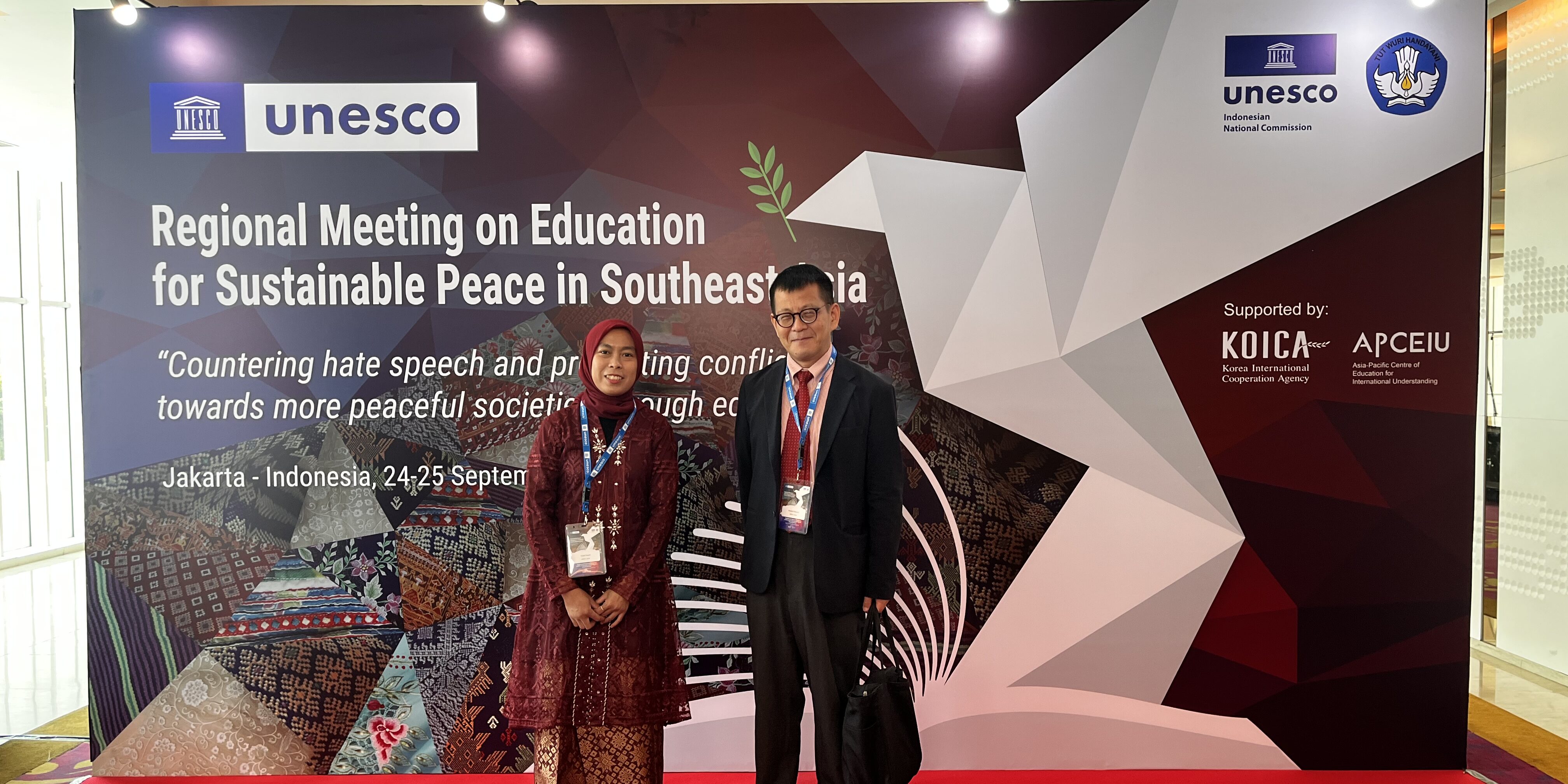
She also had the opportunity to support the preparation and implementation of a Peacebuilding Regional Meeting, as well as several workshops organised by the Education Sector in collaboration with Mitra Pendidikan Indonesia (MPI) and UNICEF. Yuni was involved in logistical preparations and supported the delivery of these workshops. This experience provided first-hand insight into the field-based work carried out by UN staff, highlighting that their roles extend beyond project design to include programme implementation and on-the-ground coordination.
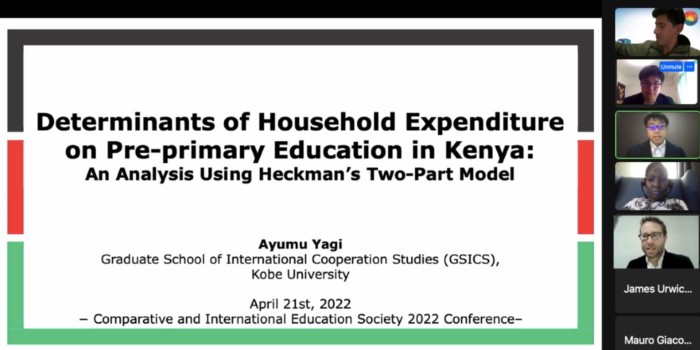
 In addition, the internship enabled Yuni to further develop her research skills. She had the opportunity to submit research outputs developed during the internship for presentation at an international academic conference scheduled to take place in San Francisco in 2026. This experience strengthened her ability to bridge applied policy research with academic dissemination and international scholarly dialogue.
Overall, the internship provided Yuni with valuable practical experience in programme coordination, policy-oriented research, and multi-stakeholder collaboration in an international setting. She developed a deeper understanding of how education and skills initiatives are designed and implemented across countries, as well as the challenges involved in translating data and research into actionable policy and practice. The experience also enhanced her professional communication, analytical writing, and cross-cultural collaboration skills, while reinforcing the importance of evidence-based approaches in education and skills development.

Authored by Yuniasih Purwanti (Doctoral Student)
Related