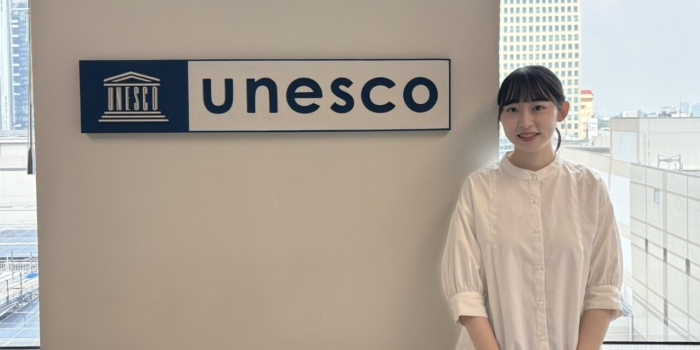
From August 17 to September 13, 2025, I conducted an internship under the supervision of Professor Faustito A. Aure at the Eastern Visayas State University (EVSU) in Tacloban City, Leyte Island, the Philippines. This internship was part of my master’s thesis research, focusing on the resettlement communities established as part of the post-disaster recovery efforts following Super Typhoon Yolanda (international name: Haiyan) in November 2013. This research focuses on the resettlement communities established as part of the post-disaster recovery efforts following Super Typhoon Yolanda (international name: Haiyan) in November 2013. The study explores how displaced residents—particularly households with children—have rebuilt their lives over the past decade, and what roles local schools have played in this process. It also aims to understand how residents have developed a sense of attachment and belonging to the resettlement areas. Special attention was given to the relationships among households, schools, and communities that support children’s education, as well as to the current living conditions and perceptions of residents ten years after the disaster.
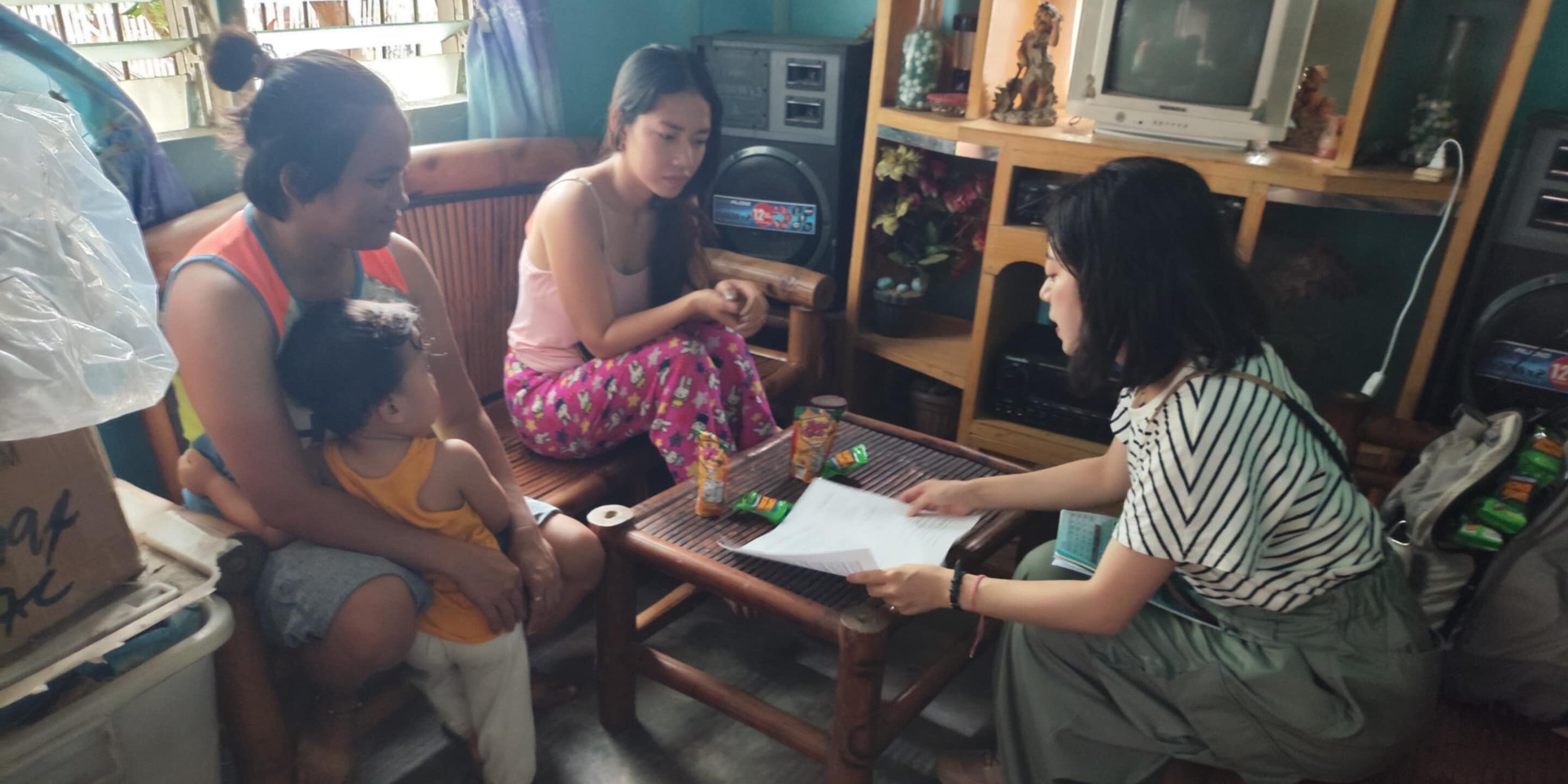
 During the internship, I visited five resettlement sites in northern Tacloban with the cooperation of Eastern Visayas State University (EVSU) and under the official authorization of the Department of Education, City Division of Tacloban (DepEd Tacloban City). The study was conducted at both an existing public school located within a resettlement area and a newly established school constructed as part of the resettlement policy. A total of 55 semi-structured interviews were conducted with principals, teachers, parents, youth, and community leaders. The interviews focused on changes in living conditions, education, and community relationships across three key phases: the early relocation period, the COVID-19 pandemic, and the present.
Through this experience, I reaffirmed that effective educational development requires not only institutional and external support but also the ability to harness the power of community-based relationships and mutual assistance. I witnessed how parents and community members collaborated around schools to support children’s learning despite limited resources and challenging environments. Beneath these efforts lies a culture of warmth, solidarity, and collective action that continues to sustain both recovery from the disaster and the long-term development of the community.
I was also deeply moved by the kindness of the people of Tacloban, who welcomed me with open hearts despite meeting me for the first time. Their hospitality and cooperative spirit showed me how trust and mutual support among residents form the foundation of strong and resilient communities. Such traditions of helping one another provide valuable lessons and insights for societies like Japan, where family and community ties are gradually weakening.
This experience has inspired me to further explore how schools can serve as centers of community building and how interactions fostered through education contribute to people’s livelihoods and the reconstruction of local communities. At the same time, interviews with young people revealed that while free education has expanded access to schooling, it has not always translated into stable employment after graduation. Ensuring sustainable livelihood opportunities and bridging the gap between education and employment remain significant challenges—issues that must continue to be examined in both research and practice.
Lastly, I would like to express my heartfelt gratitude to Professor Faustito A. Aure of Eastern Visayas State University for his invaluable guidance and extensive support throughout the internship, including coordination with the Department of Education and local schools. My sincere appreciation also goes to Dr. Analyn C. Españo and all the members of the Office of the Vice President for Students, Internationalization & External Affairs, for their warm welcome and assistance. I am equally grateful to the staff of the City Division of Tacloban, as well as to the school personnel, community leaders, and residents who generously shared their time and experiences. I would also like to extend my deepest thanks to Mr. Esquierdo, who kindly assisted me with interview coordination, transcription work, and provided invaluable guidance about local culture and customs throughout my stay. Furthermore. I wish to express my deep appreciation to Professor Aiko Sakurai for her kind advice and support during the preparation and coordination of this internship. Finally, I would like to express my heartfelt gratitude to Professor Keiichi Ogawa for his continuous guidance, encouragement, and warm support.


Authored by Kyoko Okamoto (Master’s student)
Related