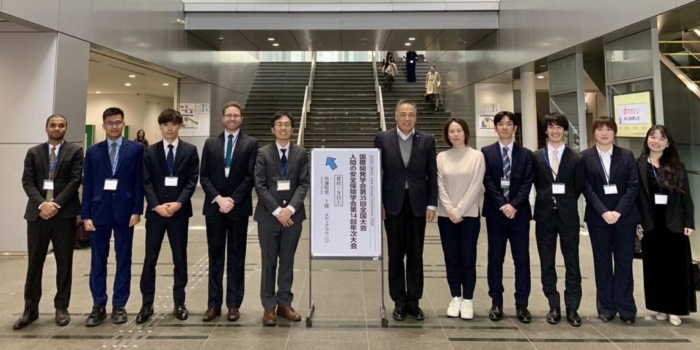
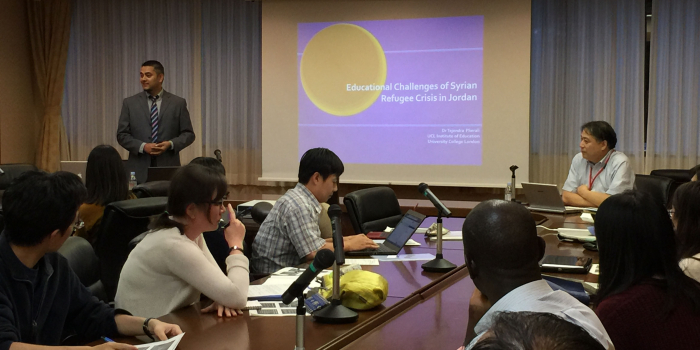
The 2025 CAMPUS Asia Plus Short-term Program at the National University of Laos (NUOL), which ran from August 17 to September 15, was a success in terms of academic research. During the first week, students attended intensive lectures at NUOL and participated in a Campus Asia Symposium with students from the National University of Laos, Korea University, Fudan University, Chulalongkorn University, and Kobe university. Following the one-week intensive courses, students undertook a three-week internship at the Ministry of Education and Sports (MoES) of Laos.
Held at the Faculty of Economics and Business Management (FEBM), the intensive courses on Advanced Development Economics provided an in-depth understanding of Laos’s socio-economic development and equipped us with essential knowledge and analytical skills to address issues related to socio-economic advancement. The lectures focused on four key themes: 1.Economic Development and Policy (covering Lao economic development, 5-year NSEDP, trade, etc.); 2.Human Capital (including human resource development and impact evaluation, etc.); 3.Sectoral Perspectives (such as environmental economics, green growth, non-market valuation, etc.); and 4.Special Topics (hospitality and tourism, post-COVID transformation, exchange rates and inflation, public finance and more). This program has provided me with the knowledge and analytical tools needed to engage effectively in sustainable socio-economic development.
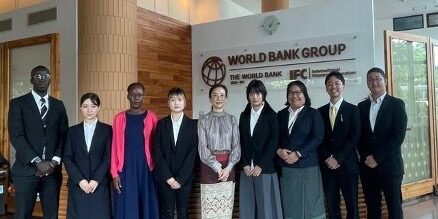
On the other hand, the internship at the Ministry of Education and Sports (MoES), hosted by the Education Coordination Unit (ECU) within the Department of Planning, provided an opportunity for full immersion into the current situation of Laos education system. It offered a rare chance to observe and engage with internationally minded educators. This was made possible through interviews we conducted with various MoES departments. We also had the opportunity to meet with key development partners, such as JICA, ADB, UNICEF, and WORLD BANK. The discussions, during which they presented their work in the education sector, were highly insightful and allowed us to refine our analysis of Laos educational system.
 Moreover, we conducted interviews with school principals from both public and private institutions across pre-primary, primary, and secondary education. I also participated in excursions to significant cultural and historical sites, including Sisaket temple, Ho Phakeo museum, Phatuxay, Thatluang stupa, Buddha park, Nam Ngum Hydropower plant, and reservoir recreation area. These visits provided me with deeper understanding of local culture, the country’s strong attachment to its traditional values, and the significance of these sites as major tourist attractions.
Lastly, I would like to express my deepest gratitude to all who supported me throughout this journey. I am especially thankful to Professor Keiichi Ogawa for his mentorship in securing my place in this program, the dedicated Campus Asia faculty members, and the invaluable support from Education Coordination Unit (ECU), Ministry of Education and Sports of Lao PDR. Their unwavering guidance made this program a memorable and pivotal chapter in my academic and professional development.
Authored by Mamadou Ciss (Doctoral Student)
Related