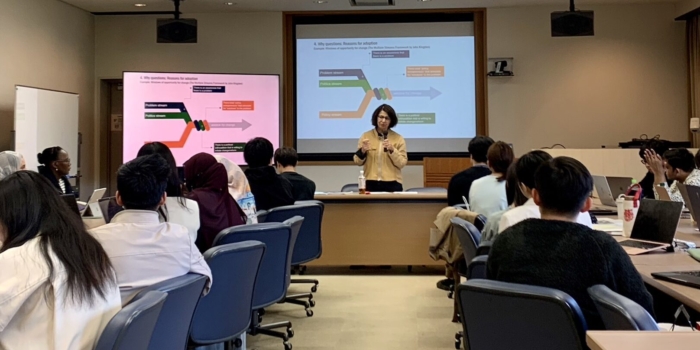
Welcome Party for New Ogawa Seminar Students
Ogawa seminar’s welcome party was held in a local BBQ restaurant on June 27th, 2016, and it was attended by Professor Keiichi Ogawa and 27 graduate students. The party was...
Graduate School of International Cooperation Studies (GSICS), Kobe University
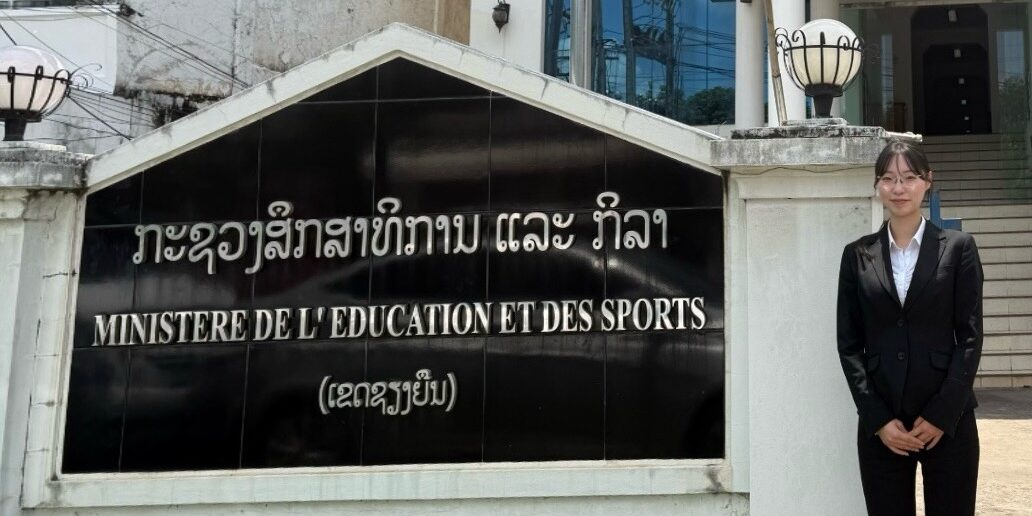
From August 24 to September 11, 2026, I participated in a three-week internship alongside other students at the Ministry of Education and Sports (MoES) of Lao PDR under the supervision of Deputy Director-General Mr. Anoupheng Keovongsa.
During the internship, I conducted interviews with officials from different departments of MoES and representatives of international organizations and development partners, and visited public schools. Through these activities, I investigated education policies and their implementation at the school level by considering educational issues from multiple perspectives, including those of government officials, international organizations, teachers, and students.
First, I conducted interviews with officials from several departments of MoES, including the Department of General Education and the Department of Higher Education. I also collected and analyzed education policy documents and statistics to investigate the government’s educational priorities and challenges in policy implementation. By comparing the information in policy documents with the explanations provided by government officials, I was able to understand the background of education policies and some challenges in their implementation, which were difficult to identify from documents alone. Through this process, I learned that it is necessary to understand not only official policy documents but also how government officials interpret and implement these policies.
Second, I visited primary and secondary schools in Vientiane to observe school facilities and learning environments, and interviewed school principals and teachers about the educational challenges they face. During these visits, I heard about various challenges, such as the lack of materials for science experiments and shortages of mathematics and chemistry teachers. I also learned from the interviews that some students use online resources, such as YouTube, to supplement their learning because they cannot receive sufficient instruction at school due to teacher shortages. These findings showed that many challenges remain in achieving the objectives of education policies at the school level. This experience also reminded me of the importance of considering not only the content and implementation of education policies but also how they affect students’ learning environments and educational opportunities when evaluating these policies.
Third, I interviewed representatives of international organizations and development partners, including the World Bank, the Asian Development Bank, UNICEF, and JICA, to understand their roles and approaches to supporting educational development in Lao PDR. In particular, I learned that each organization has different responsibilities and priorities while cooperating with the government to improve education. Through these interviews, I once again recognized the importance of cooperation among different stakeholders, including the government, schools, international organizations, and development partners, in addressing educational challenges.
Overall, this internship was an invaluable experience that allowed me to connect the knowledge I have gained through my graduate studies with the actual situation of education in Lao PDR. In particular, I learned that understanding education policies requires considering several perspectives, including the content of policy documents, the interpretations of government officials, policy implementation at the school level, and students’ learning experiences. I also recognized the importance of examining educational issues comprehensively by considering the connections between primary, secondary, and higher education. I would like to apply the knowledge and perspectives gained through this internship to my future research activities and career.
This internship was made possible through the cooperation and support of many people. I would like to express my sincere gratitude to Deputy Director-General Mr. Anoupheng Keovongsa and all the staff members of the Ministry of Education and Sports of Lao PDR for warmly accepting us and providing valuable opportunities for our research. I am also grateful to the representatives of international organizations and development partners who kindly participated in our interviews, as well as to the school principals and teachers who shared their experiences and explained the actual situations at their schools. I would also like to thank Assistant Professor Tatsuya Maisawa and all the other staff members of Kobe University’s CAMPUS Asia Office for their great support in preparing and implementing this program. Finally, I would like to express my sincere appreciation to Professor Keiichi Ogawa for providing me with this internship opportunity and for his continued guidance and support in my research activities.
Authored by Chihiro Taketomi (Master’s student)