On taking up an internship with the World Bank’s TRESOR Program in the Republic of Congo, I expected to spend my days reading project documents. I was not wrong: in a few weeks I read more Project Appraisal Documents (PADs), Implementation Completion Reports (ICRs), and government decrees than in a semester of coursework. What I hadn’t expected was how much school textbooks, of all things, could teach me about how development finance really works.
A very specific issue: textbook availability at a lower cost
TRESOR — Transforming the Education Sector for Better Outcomes and Results Program — is a US$94.6 million World Bank Program for Results supporting Congo’s education sector. Congolese schoolchildren have been paying €4 to €6 per textbook, several times higher than comparable reforms elsewhere, due to high unit costs, limited editorial control by the National Institute for Educational Research and Action (INRAP), and insufficient local printing capacity. In July 2026, the Ministry of Education adopted a transitional reform, Model 5: INRAP takes full editorial responsibility while printing goes to international tender, targeting a unit cost of about €0.90 — nearly a sevenfold reduction. Longer term, once INRAP has built up its own capacity, the country plans to move to Model 3, where INRAP both edits and prints the textbooks itself.
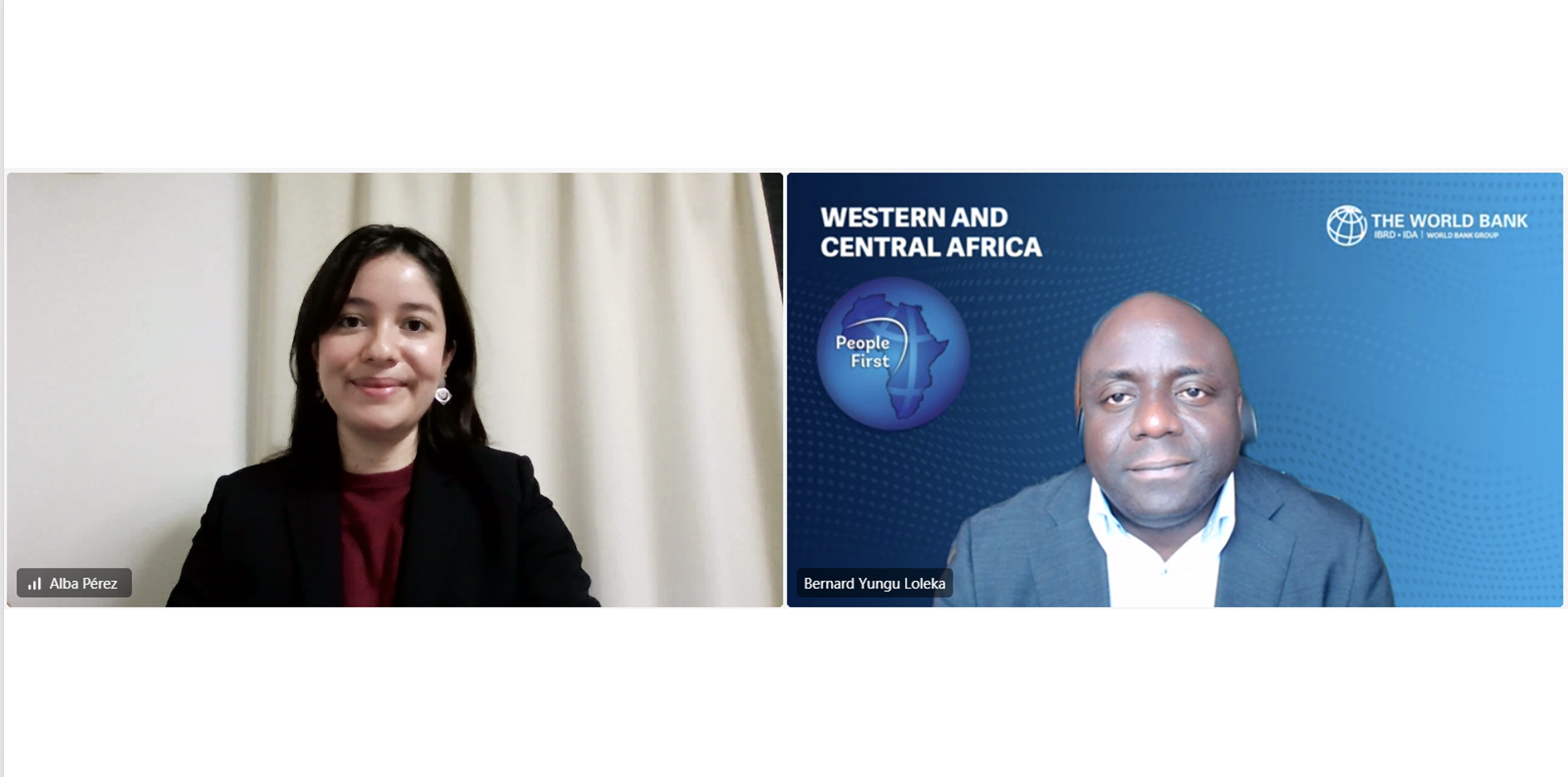
Under the direct supervision of Dr. Bernard Yungu Loleka, the TRESOR Program Task Team Leader, my task has been to help build the evidence base for that transition. Congo’s first National Textbook Policy was being finalized ahead of the October international consultations, and the team needed structured, well-sourced comparative material on countries that had already carried out similar reforms. That is where I came in: producing country briefs, and later a synthesis, grounded in World Bank project documents, government strategy papers, laws and decrees, and academic literature.
What the research actually looked like
In reality, this meant preparing structured country briefs — for Rwanda, Cameroon and Cambodia — each tracing the same story: the pre-reform baseline, the governance and financing model adopted, and the results achieved. The implementation record proved the most informative, and the most humbling, part of the exercise, forcing me to go back more than once and correct a citation I had mixed up between a World Bank evaluation and a government diagnostic. Learning precisely which document says what, and when, taught me more about evidence-based policy writing than any lecture could.
It also gave me a far more concrete sense of what a Program for Results (PforR) operation actually is. I understood Disbursement-Linked Indicators (DLI) in the abstract before this internship; now I have traced, procurement lot by procurement lot, how a missed delivery deadline translated into a quantified disbursement cancellation. Results-based financing turns out to be inseparable from the politics of who controls textbook publishing, printing, and distribution — the whole point of this assignment, and every country brief I have written makes that a little clearer.
The importance of my deliverables
Looking back, the work fell naturally into three connected deliverables, each building on the last.
The first was the set of country briefs — four-page assessments of Rwanda, Cameroon, and Cambodia covering reform context, institutional model, costs and financing, implementation, and results. Producing them taught me what it means to write something a government will actually use, not just something that proves I did the reading.
The second was a Synthesis Note drawing the three briefs together: the lessons most relevant to Congo’s transition, the risks observed across countries, and specific recommendations on INRAP’s capacity, printing procurement, distribution, and financing sustainability. Writing it meant weighing how reliable the evidence for each claim was—some findings were well documented, while others rested on a single report and had to be presented more cautiously. That discipline, separating what is known from what is merely plausible, is probably the most transferable skill I am taking from this internship.
The third was taking part in the virtual international consultations held from October 12 to 16, where Congolese officials met directly with delegations from Cameroon, Mauritania, Cambodia, Rwanda, and the Central African Republic. My country briefs and synthesis work served as the Congolese team’s reference material going into these sessions, and I prepared and personally put questions to each delegation, grounded in their presentations and in my own research. Watching officials from five countries compare notes on governance, financing, and distribution made concrete something I had understood only in the abstract: comparative evidence is only useful once someone with the authority to decide is in the room to hear it.
When I started the internship, I hoped to learn how comparative evidence is applied in a real policy process, rather than kept in a report no one reads. I now know, because I watched it happen. It has also reminded me why I chose to study international education policy — the unglamorous, necessary job of getting the details right, so a government making an important decision has a firm basis to work from.
A word of thanks
Let me finish by thanking two people whose support made this possible: Dr. Bernard Yungu Loleka, my supervisor on the TRESOR team, for genuine and meaningful work from the start and for taking the time every week to support me and my colleagues; and my master’s supervisor, Professor Keiichi Ogawa, for encouraging me to take an internship that would put my studies to the test, and for the grounding that let me approach it with confidence. I am truly thankful to both of you, and proud to have seen this project through, from the initial diagnostic to the international consultations themselves.
Authored by Alba Pérez (Master’s Student)
Related