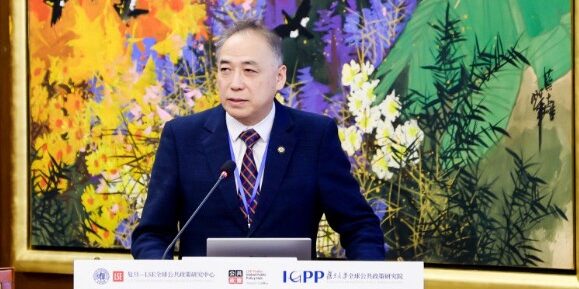
On November 2, 2026, Professor Keiichi Ogawa delivered an invited speech at the 5th LSE-Fudan Annual Academic Conference, held at Fudan University in Shanghai, China, from November 2 to 3. Organized under the theme “International Organizations and Multilateralism: The Transformation of Global Governance in a Multipolar Era,” the conference was co-hosted by the LSE-Fudan Research Centre for Global Public Policy, the LSE-Fudan Global Public Policy Hub, and the Fudan Institute for Global Public Policy (IGPP), as part of the 3rd Fudan Global Governance Academic Month Event Series. The opening session featured remarks from leaders of Fudan University, the London School of Economics and Political Science (LSE), and the Doha Institute for Graduate Studies, as well as the British Consul General in Shanghai.
Professor Ogawa, Vice Dean of the Graduate School of International Cooperation Studies (GSICS), Kobe University; Director of the Global Research Center for Education Policy and Planning (GEPP); and Chairholder of the UNESCO Chair on Education for Gender, Disaster Resilience, and Well-being, spoke on Panel I, “Geopolitics, Economic Statecraft, and the Changing Global Order.” The panel was chaired by Professor Susana Mourato, Vice President of LSE, and also included scholars from the University of Oxford and LSE. His speech was titled “Education Finance from the Perspective of the Global Financing Architecture.”
Professor Ogawa began by explaining why the issue matters: a year of direct aid to education now equals only about 1.5 days of world military spending. He pointed out that development aid fell by 23.1% in 2025, the largest drop on record, that education is often cut first and hardest where aid makes up the education budget, and that crisis-affected children pay the highest price. Turning to the current debate on whether the global education architecture is “broken” or “underfunded,” he argued that it is instead being “hollowed out”: multilateral institutions retain their mandates but are losing the means to deliver them. He summarized his argument in the message “Protect the floor, fund the core, and treat education as security,” and proposed policy actions, including ring-fencing basic education and low-income countries, prioritizing core funding over earmarked funds, expanding debt-for-education swaps and relief, bridging humanitarian and development finance, and tracking aid cuts in real time. He closed by noting that just 12 days of world military spending would cover the entire annual SDG 4 financing gap of the 79 poorest countries.
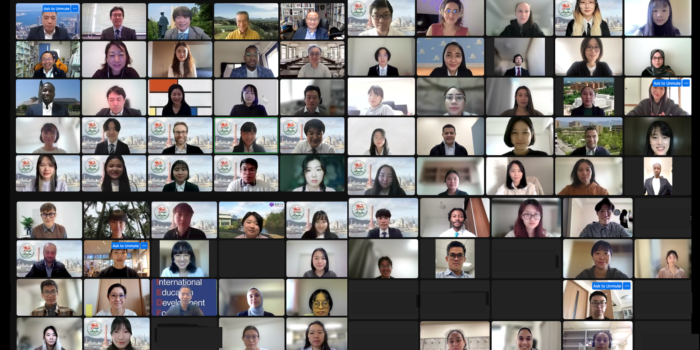
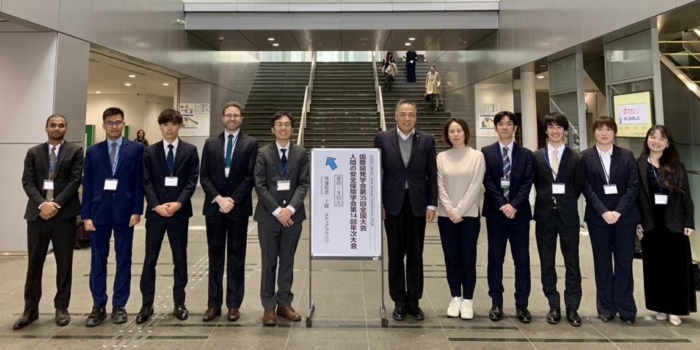
About 100 participants attended the session, including faculty members and students from Fudan University, LSE, and other institutions. Professor Ogawa’s empirical evidence attracted strong interest, and the Q&A session was filled with questions from both professors and students. Lively discussions continued at the networking session that followed. Students from the Ogawa Seminar studying at Fudan University through the CAMPUS Asia Plus Program also attended the conference. The speech offered a timely perspective on how the global governance of education is changing amid sharp cuts in development aid, and it further strengthened academic exchange among Kobe University, Fudan University, and LSE.
Authored by Sakuya Irikado (Master’s student)
Related