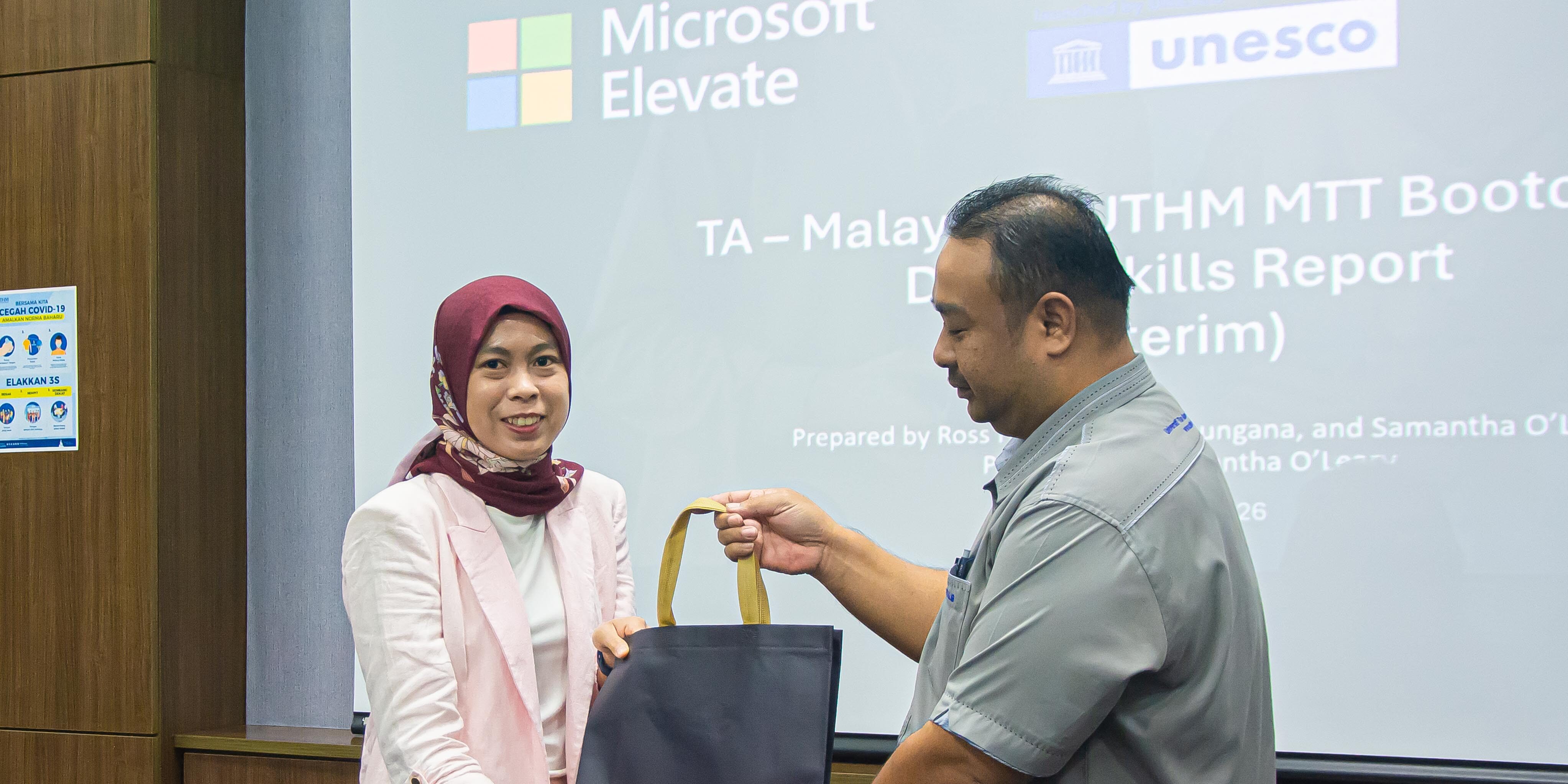
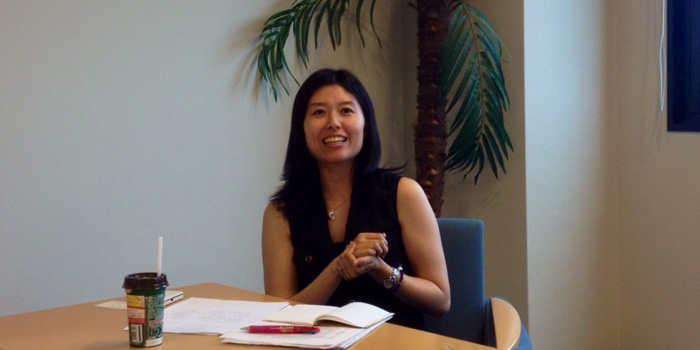
Earlier this year, I began a consultancy with UNESCO Jakarta. As part of this consultancy, I participated in a mission to Batu Pahat, Malaysia, for the AI EmpowerEd Training Programme hosted by Universiti Tun Hussein Onn Malaysia (UTHM). The initiative, under the Global Skills Academy, was delivered in partnership with UNESCO, Microsoft Elevate, KPMG International, and Tablet Academy. The programme took place from 23–27 February 2026, and brought together Master Teacher Trainers (MTT) to strengthen their readiness to integrate artificial intelligence (AI) into teaching and workplace learning.
 AI has been rapidly transforming industries, and technicians and vocational graduates are no longer working only with tools and machines. They increasingly interact with intelligent systems that assist in troubleshooting, documentation, design, and decision-making. In Malaysia, businesses have increasingly integrated AI into their operational practices, with AI adoption growing at approximately 35%. However, many Malaysian businesses identify the lack of AI-related skills as a major barrier to further adoption, contributing to an estimated USD 48 billion in unrealised annual productivity. Against this background, the AI EmpowerEd programme plays an important role. The training was designed to address this need by equipping TVET teachers with practical AI competencies as well as a strong ethical foundation for responsible use.
The mission to Malaysia has been successfully completed, while the broader consultancy work continues. As part of this work, I contribute to strengthening the programme’s evidence base and documenting its impact. Working under the guidance of the UNESCO Jakarta Office and in close coordination with UTHM and Tablet Academy, I support the development of an evaluation framework that captures both the quantitative and qualitative dimensions of the training experience.
 This work involves designing and refining data collection instruments, engaging directly with participating TVET teachers to understand their learning journeys, and gathering in-depth perspectives that complement the statistical findings. Through this process, I seek to ensure that the programme’s outcomes are not only measured but thoughtfully interpreted within the broader context of digital transformation in TVET.
In addition, I support preparing video stories and key messages that translate participants’ insights into accessible and compelling narratives. By amplifying their voices and experiences, these communication efforts aim to promote more effective and inclusive digital skills development for TVET educators across the region.
The insights generated through this work will inform a comprehensive analytical report reflecting on the effectiveness of the Digital and AI Skills Training at UTHM, while also offering forward-looking recommendations to further strengthen AI capacity development within Malaysia’s TVET ecosystem.

Authored by Yuniasih Purwanti (Doctoral Student)
Related